















By Anshul Khanna | Managing Director, Station Satcom
I was aboard a coastal surveillance vessel in 2001 when one of our crew, frustrated with choppy HF radio, remarked, “We can stream cricket on land. Why not sea?” Back then, it was wishful thinking. Today, it’s a reality—and it’s no accident. What started as a whisper from the sky has now become a full-blown networked orchestra, thanks to three key players in satellite orbits: LEO, MEO, and GEO.
At Station Satcom, having worked on every layer of this satellite stack for the past two and a half decades, I believe it’s time we demystify this “alphabet soup” for decision makers.
Three Orbits, Three Strategies
Each orbit type is fundamentally defined by physics—particularly altitude and velocity—and those in turn define coverage, latency, and use case relevance.
| Orbit Type | Altitude | Round-Trip Latency | Constellation Style | Best Use CaseReal-time apps, mobile assetsNavigation, some HTS internetBroadcast, bulk data, stable endpoints |
| LEO (Low Earth Orbit) | 500–1,200 km | ~25–40 ms | Multi-satellite mesh | |
| MEO (Medium Earth Orbit) | 8,000–20,000 km | ~120–180 ms | Moderate constellation | |
| GEO (Geostationary Orbit) | 35,786 km | ~550–650 ms | Single-satellite coverage |
To put this in perspective: a LEO ping is roughly equivalent to a fiber connection between Mumbai and London; a GEO ping can be like speaking through a tin can with half a second delay.
LEO: The Disruptor at 1,200 km
In the last two years, LEO constellations have rewritten the rules. We’ve integrated both OneWeb and Starlink services across over 300 maritime assets—and the results have been nothing short of revolutionary.
- Starlink delivers bandwidths exceeding 200 Mbps with latencies consistently under 40ms, ideal for video conferencing, telemedicine, and sensor-driven vessel automation.
- OneWeb, on the other hand, with its higher latitude coverage and regulated gateway model in India, is excelling in government-aligned maritime zones, especially within Indian territorial waters.
LEO constellations use hundreds to thousands of fast-moving satellites. Their proximity to Earth allows ultra-low latency, but it also demands sophisticated phased array antennas, auto-tracking terminals, and robust ground network integration— capabilities we’ve built into our Station Satcom Unified Platform.
Maritime: Why LEO is a Sea-Change
From merchant vessels in the Andaman Sea to patrol boats near the Gulf of Aden, we’re seeing firsthand how LEO is transforming at-sea operations:
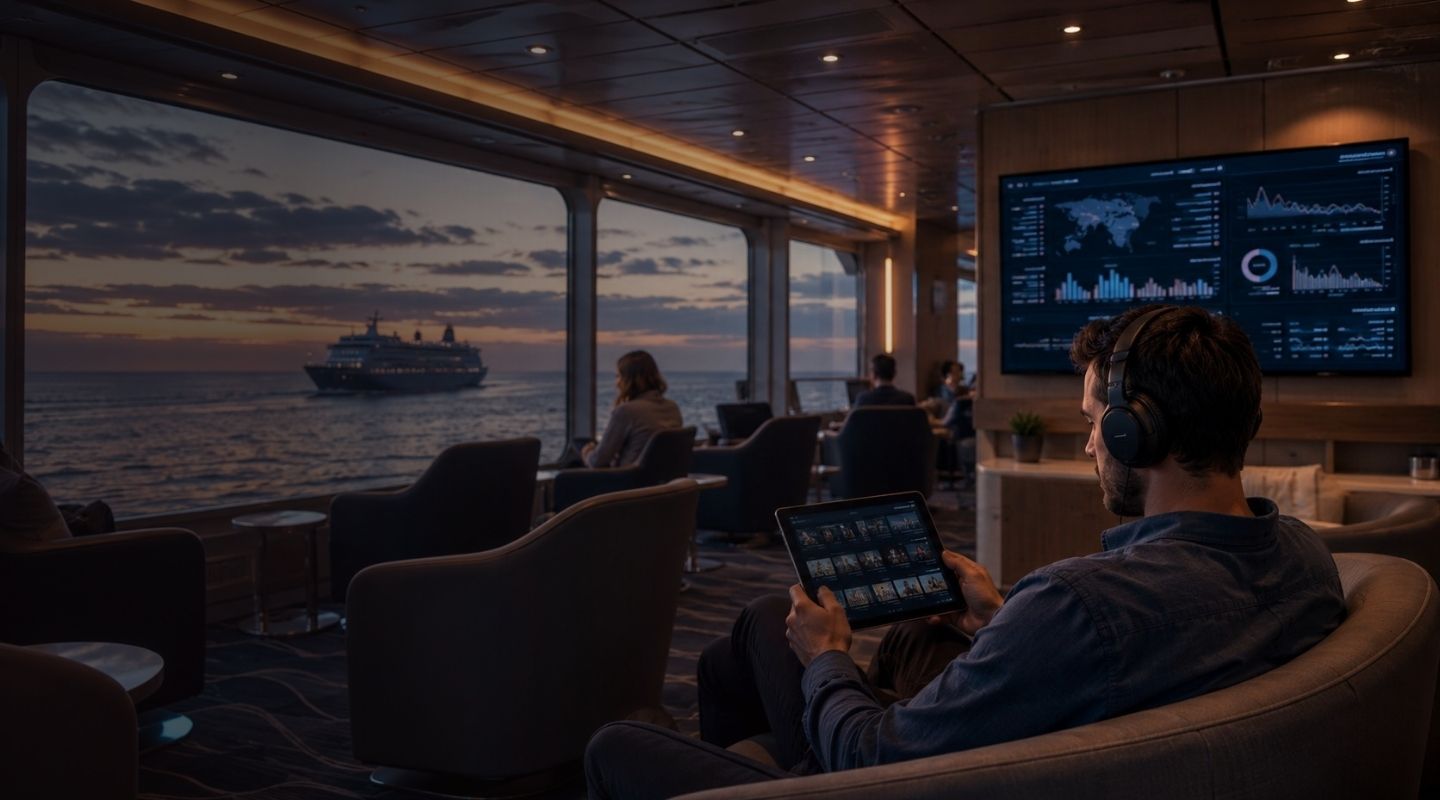
- Crew Welfare: Netflix and WhatsApp video calls are now the norm, not luxuries.
- Remote IT & OT Management: We push firmware updates and run full diagnostics from our NOC in Mumbai to vessels thousands of kilometers away in real time.
- High Uptime: LEO satellites, due to their quantity and architecture, offer more robust continuity under cloud cover and rain fade—critical during the Indian monsoon.
GEO: Still the Backbone of Maritime Communications
While LEO is flashy and fast, GEO remains invaluable. With just three satellites, you can achieve near-global coverage.
Station Satcom continues to deliver Ka- and Ku-band VSAT services over GEO satellites from Intelsat, Inmarsat (now part of Viasat), and SES. These provide consistent broadband for large vessels, FPSOs, and offshore rigs where mobility is minimal but bandwidth demand is high.
But we’re honest with our clients: GEO’s 600ms latency is a limitation. Applications that depend on real-time user feedback—like VoIP, multiplayer gaming, or remote surveillance—will suffer.
MEO: The Strategic Middle Ground
We’re also watching the MEO space closely. Operators like SES O3b mPOWER are building high-throughput satellite (HTS) constellations in MEO to blend the low latency of LEO (~120ms) with the higher throughput and broader coverage of GEO.
The MEO layer is well-suited for:
- Energy platforms and coastal stations
- Defense applications with predictable data demands
- Latency-sensitive backhaul where GEO is too slow, and LEO too volatile
The Industry Joins the Race
The rise of LEO has drawn heavyweights into orbit:
- Amazon Kuiper is preparing its first satellite launches, aiming for enterprise grade broadband with custom silicon.
- Telesat Lightspeed is building a 198-satellite LEO network targeting secure government and maritime comms.
- Eutelsat OneWeb, our long-time partner, is going hybrid—combining GEO and LEO under one umbrella.
This means more redundancy, more coverage, and more competition—which drives down costs and improves SLAs for end users.
Our Approach: Don’t Choose. Combine.
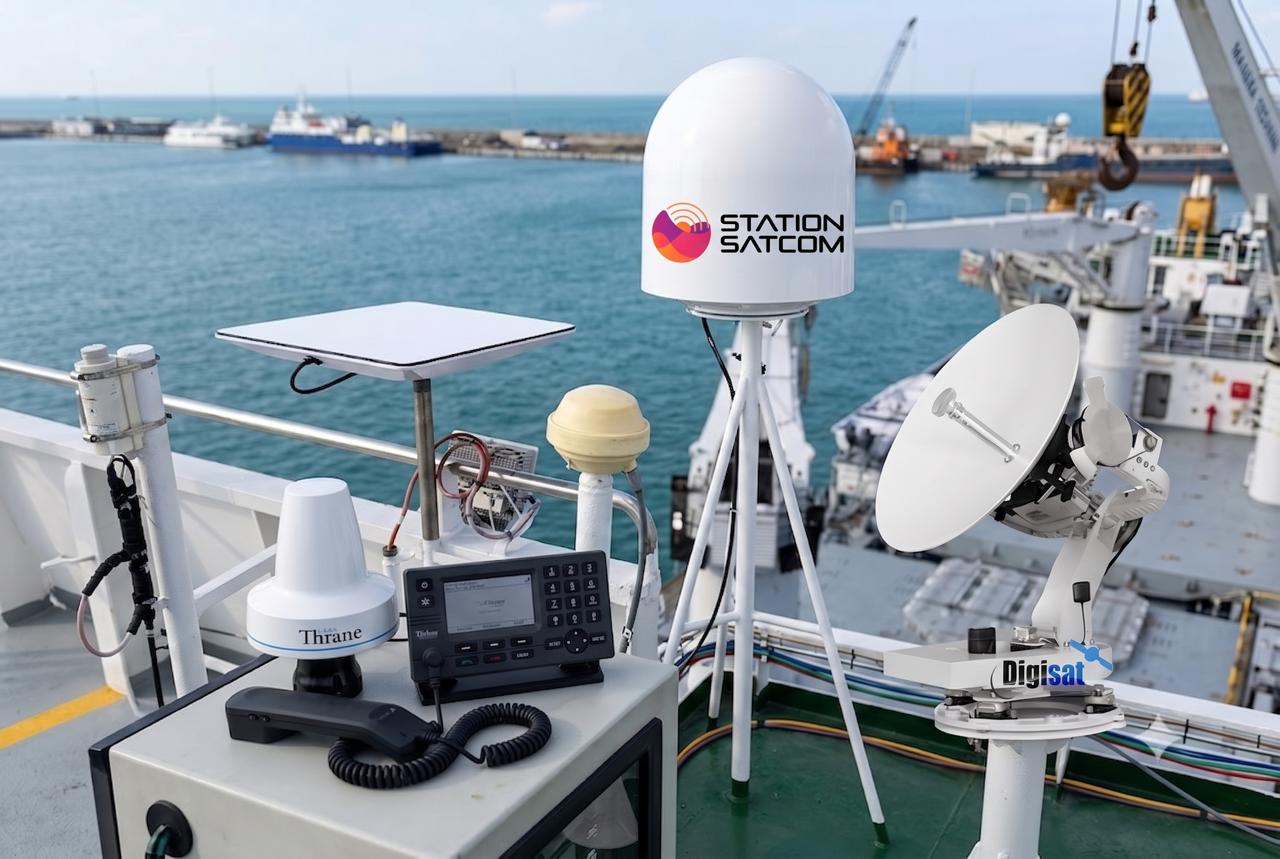
At Station Satcom, we’ve pioneered hybrid maritime networks—combining LEO for dynamic, low-latency tasks and GEO for cost-effective, high-volume data. Add in 4G/5G coastal fallback and Iridium Certus for emergencies, and you’ve got a bulletproof solution
Here’s a typical setup we deploy:
- Primary: LEO (Starlink/OneWeb)
- Secondary: GEO VSAT (Intelsat/Inmarsat)
- Fallback: L-Band (Iridium FBB or Certus)
- Management: Multi-WAN routers, automated failover, traffic shaping
- Security Layer: Integrated via Station SecureX with XDR, RBAC, and IDS/IPS
Beyond the Maritime Horizon
While our primary theatre is the sea, these satellite layers are powering breakthroughs across:
- Defense: Mobile command units, drone relays, encrypted low-latency feeds
- Energy: Rig management, seismic telemetry, predictive maintenance
- Disaster Recovery: Station R.O.C.K kits deployed in floods and war zones for instant communications
The Final Word: Strategy Over Speed
The right satellite strategy is not about picking the fastest option. It’s about choosing the right blend—latency vs. coverage, bandwidth vs. redundancy, mobility vs. cost.
Three decades ago, the problem was silence at sea. Today, the problem is managing abundance. That’s a good problem to have.
And for those of us shaping connectivity from deck to data center—this is only the beginning.
Anshul Khanna
Founder & Managing Director, Station Satcom Group
Over 25 years in the business of keeping businesses connected—on land, at sea, and in the air.